You need to clean your home’s exterior, but which method should you choose?
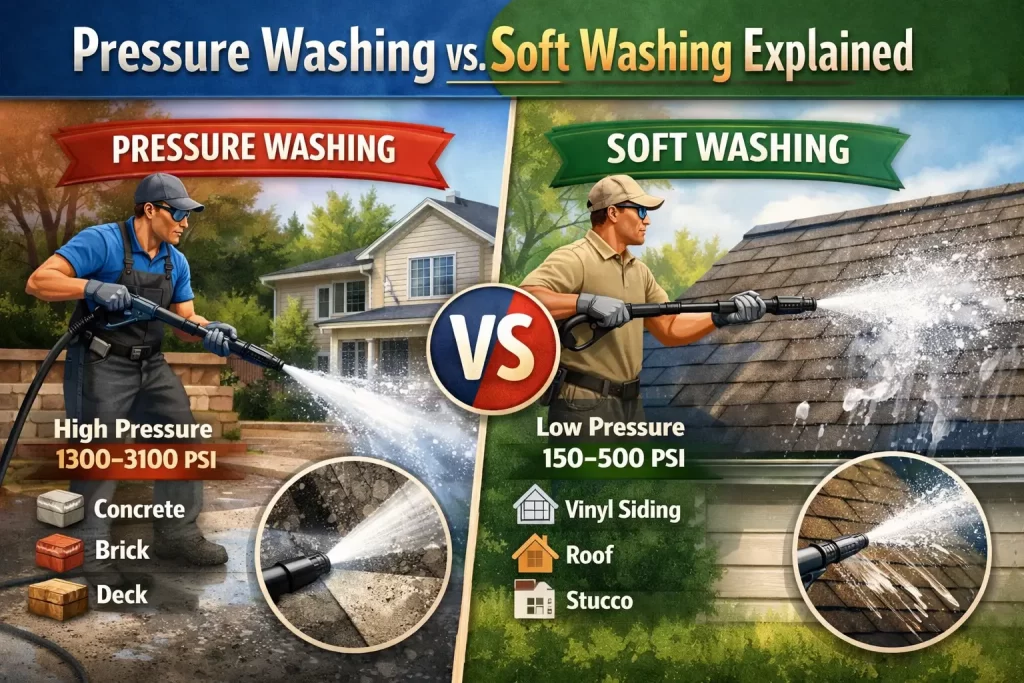
Pressure washing blasts away dirt with high-pressure water (1,300-3,100 PSI), while soft washing uses low-pressure water (150-500 PSI) combined with cleaning solutions to gently remove grime.
The right choice depends on what surface you’re cleaning and how dirty it is. Hard surfaces like driveways and concrete need pressure washing, but delicate materials like vinyl siding and roofs require soft washing to avoid damage.
What Makes Pressure Washing Different From Soft Washing
The main difference is water pressure and how each method cleans. Pressure washing relies on forceful water to blast away dirt, stains, and buildup from surfaces. It uses water pressure between 1,300 and 3,100 PSI to physically remove grime without many chemicals.
Soft washing takes the opposite approach. It uses low-pressure water (150-500 PSI) mixed with specialized cleaning solutions to break down dirt, algae, mold, and mildew. The chemicals do most of the work instead of the water pressure. Think of pressure washing as scrubbing with force and soft washing as soaking with cleaners.
Both methods can use the same equipment. Many pros modify a pressure washer by changing the nozzle to create a wider spray pattern, which drops the pressure for soft washing. This makes soft washing gentler on surfaces that high pressure could damage, like painted siding or asphalt shingles.
Power washing adds another option to consider. It works exactly like pressure washing but uses heated water instead of cold. The hot water cuts through grease and organic matter faster, but it costs more and isn’t safe for all surfaces.
3 Surfaces You Should Pressure Wash
Pressure washing works best on tough, non-porous surfaces that can handle high water force. You’ll get faster results on these materials because the strong spray quickly removes stubborn stains and buildup. These surfaces actually benefit from the aggressive cleaning approach.
1. Driveways and Concrete Patios
Your driveway collects oil stains, tire marks, and ground-in dirt that regular cleaning can’t remove. Pressure washing concrete costs $100-$250 on average and removes years of buildup in hours. The high pressure breaks up tough stains without damaging the concrete surface. You can even use pressure washing to prepare concrete for sealing or staining projects.
Concrete is one of the few surfaces where you can safely use 3,000-4,000 PSI. The porous nature of concrete means water won’t force its way underneath to cause damage. Regular pressure washing every 1-2 years prevents permanent staining and keeps your driveway looking new.
2. Brick Walkways and Stone Surfaces
Brick and stone can handle high-pressure cleaning when done correctly. The water blasts away dirt from between cracks and crevices where mold grows. Just make sure your pro knows to protect the mortar between bricks from erosion. Older brick with deteriorating mortar might need soft washing instead to prevent damage.
Stone surfaces like flagstone patios and natural stone walkways benefit from pressure washing too. The high pressure removes algae that makes these surfaces slippery and dangerous when wet.
3. Wood Decks and Fences (With Caution)
Wooden surfaces need careful pressure washing to avoid splintering or gouging the wood. Your pro should use a lower PSI setting (around 1,200-1,500) and keep the nozzle moving to prevent damage. Some older or softer wood types might need soft washing instead. Learn more about pressure washing wood safely.
Pressure washing removes old stain and prepares wood for refinishing better than sanding alone. The water lifts embedded dirt and opens wood pores so new stain penetrates evenly. Just let the wood dry completely (2-3 days) before applying any sealers or stains.
4 Surfaces That Need Soft Washing
Soft washing protects delicate surfaces from the damage that high pressure causes. The cleaning solutions break down organic growth like algae and mold without stripping paint or dislodging shingles. Most homeowners need soft washing for these common exterior materials.
- Vinyl Siding: High pressure can crack vinyl or force water underneath, causing interior damage and mold growth between walls
- Asphalt Roof Shingles: Pressure washing strips away protective granules and shortens your roof’s lifespan by years
- Stucco Walls: The porous texture traps water under high pressure, leading to cracks and moisture problems inside your walls
- Painted Surfaces: Pressure washing peels paint off wood, metal, and cement, but soft washing preserves your paint job while removing dirt
The cleaning solutions used in soft washing include sodium hypochlorite (bleach), surfactants, and algaecides. These chemicals need time to work, so your pro applies them and lets them sit for 10-15 minutes before rinsing. The solutions kill algae and mold at the root, which keeps your home cleaner longer than pressure washing alone. For professional house washing services, experts use these proven techniques to protect your siding.
Soft washing extends your roof’s life by removing harmful organisms without damaging shingles. Black streaks on your roof are actually algae that feed on the limestone in shingles. Regular soft washing every 1-2 years prevents this algae from breaking down your roof materials.
Which Method Costs More
Both methods cost about the same because pros use similar equipment. Professional soft washing or pressure washing runs $250-$500 for most homes. Soft washing might cost slightly more ($50-$100 extra) because of the specialized cleaning solutions required.
Your total cost depends on several factors. A larger home costs more to clean because it takes more time and materials. Heavily soiled surfaces need stronger solutions or multiple treatments, which increases the price. You’ll also pay more for two-story homes because they require ladders or special equipment to reach upper levels safely.
Most pros charge either by the hour ($50-$100 per hour) or by square foot ($0.10-$0.50 per square foot). Hourly rates work better for small jobs or heavily soiled areas that need extra attention. Square footage pricing gives you a clearer estimate upfront for larger projects.
DIY pressure washing seems cheaper at first. You can rent a pressure washer for $40-$100 per day or buy one for $150-$600. But without proper training, you risk damaging your home’s exterior, which costs thousands to repair.
Pros complete the job 10 times faster than DIYers and know the right pressure settings for each surface. They also have access to professional-grade cleaning solutions that stores don’t sell. The cost difference between DIY and professional service is usually $150-$300, which protects you from expensive mistakes. For a detailed breakdown, read our guide on how much it costs to pressure wash a home.
Timing affects your costs too. Spring and summer are peak seasons for exterior cleaning, so you might pay premium rates. Schedule your cleaning in fall or early spring to potentially save 10-20% on labor costs.
Ready to Clean Your Home’s Exterior?
Choosing between pressure washing and soft washing comes down to your surface material and cleaning goals. Hard surfaces like concrete driveways, brick walkways, and stone patios need the powerful cleaning that pressure washing provides. Delicate surfaces like vinyl siding, roofs, and painted walls require the gentle approach of soft washing. Many homes need both methods for a complete exterior cleaning.
Regular cleaning protects your investment beyond just appearances. Mold and algae eat away at roofing materials and siding, shortening their lifespan and leading to costly replacements. Most experts recommend professional cleaning every 6-12 months to prevent buildup and maintain your home’s value.
Don’t risk damaging your home with the wrong method or improper technique. Professional cleaners know exactly which pressure settings and cleaning solutions work for each surface. They carry insurance that protects you if anything goes wrong, and they complete the work safely without injury risk.
The difference between a clean home and a damaged one comes down to using the right method. Contact us today to assess your specific needs and get your home looking its best again.