
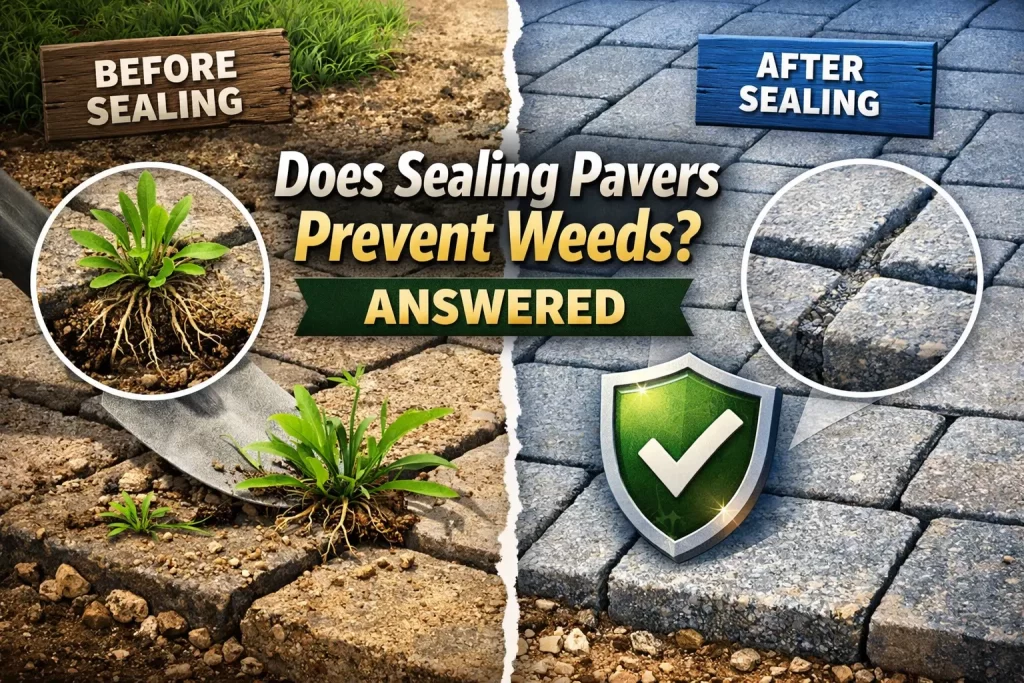
You’re tired of pulling weeds from between your pavers every week. Paver sealing significantly reduces weed growth by hardening the joint sand with polymer additives, preventing about 90% of weeds from taking root.
However, sealing doesn’t completely eliminate weeds because seeds can still land on the surface and grow in accumulated debris. The sealer works by creating a mortar-like barrier in the joints that makes it extremely difficult for weeds to germinate and push through.
How Paver Sealing Stops Weeds From Growing
Paver sealer contains polymer additives that penetrate deep into the sand between your pavers. When the sealer soaks into the joint sand, it hardens the sand to a consistency similar to mortar. This creates a solid barrier that blocks weed seeds from settling into the joints and germinating.
The hardened sand prevents weed roots from establishing themselves in the cracks. Without loose sand for roots to grip, weeds struggle to gain a foothold between your pavers. The sealer essentially transforms the soft, loose joint material into a firm surface that resists plant growth.
Most professional paver sealing services aim to prevent at least 90% of future weed growth. The remaining 10% typically occurs when organic matter accumulates on top of the sealed surface, giving airborne seeds a place to land and sprout. These surface weeds are much easier to remove than deep-rooted weeds that grow from beneath the pavers.
3 Factors That Affect How Well Sealing Prevents Weeds
Even with proper sealing, several conditions determine how well your pavers resist weed growth. You need to consider these factors when planning your paver maintenance strategy.
1. Drainage and Moisture Levels
Poor drainage creates the perfect environment for weeds to thrive. When pavers sit in damp, shaded areas, airborne organic materials stick to the wet surfaces and create ideal conditions for weed germination. Sunken areas, improper slopes, or stone walls that block water flow can cause moisture to pool between pavers.
Fixing drainage issues before sealing gives you the best long-term weed prevention results. Your sealer works most effectively when water drains properly and the paver surface dries quickly after rain.
2. Nearby Vegetation and Garden Beds
Plants in pots or garden beds adjacent to your pavers introduce weed seeds onto the paved surface. Walking across your freshly mowed lawn can also deposit grass seeds onto your patio or walkway. Wind carries seeds from neighboring properties, and animals track them in from surrounding areas.
You can minimize this by creating buffer zones between your pavers and planting areas. Regular sweeping removes seeds before they have a chance to settle and germinate.
3. Existing Root Systems Beneath Pavers
Weeds with established root systems under your pavers pose a bigger challenge than surface weeds. Sealing may slow their growth initially, but strong roots can eventually push through hardened sand joints. If your pavers are already overrun with weeds that have deep root systems, you should pre-treat them before sealing for best results.
Pressure washing removes existing weeds and their root systems, giving you a clean slate for sealing. This combination provides much better weed prevention than sealing alone.
What Maintenance You Need After Sealing Pavers
Sealing your pavers is not a one-time solution. You need ongoing maintenance to maximize weed prevention and keep your outdoor space looking pristine. Simple tasks done regularly prevent weeds from returning.
- Sweep or blow off debris weekly using a leaf blower to remove organic matter
- Rinse pavers every 2-3 weeks with a garden hose on fan setting to wash away dirt
- Clean after heavy rain when sediment and organic materials wash onto the surface
- Treat problem areas immediately with a diluted bleach solution (1 part bleach to 3 parts water)
Keeping your pavers clean of debris is the most crucial maintenance step. Dirt, leaves, and grass clippings provide a growth medium for airborne weed seeds, even on sealed surfaces. A quick weekly sweep takes just minutes and dramatically reduces weed problems.
You should avoid using a pressure washer for routine cleaning because high pressure can damage the sealed joints. Save pressure washing for deep cleaning before resealing your pavers.
How Long Sealer Prevents Weeds Between Pavers
The weed prevention benefits of paver sealing last 2-3 years on average. After this period, the sealer begins to break down from UV exposure, foot traffic, and weather conditions. You’ll notice weeds starting to appear more frequently as the joint sand softens.
Heavy traffic areas or pavers exposed to extreme weather conditions may need resealing every 2 years. Patios in shaded areas with less foot traffic can often go 3-5 years between sealing applications. Your specific timeline depends on how much use your pavers get and environmental factors.
Reapplying sealer every 2-3 years maintains the hardened sand barrier that prevents weed growth. During the resealing process, professionals remove any weeds that have appeared, add fresh joint sand where needed, and apply new sealer to restore full protection. Learn more about how long paver sealer lasts to plan your maintenance schedule.
Regular resealing also protects your pavers from fading, staining, and weather damage. The cost of periodic sealing is much less than replacing damaged pavers or constantly battling weed infestations.
Polymeric Sand vs. Paver Sealer for Weed Control
You have two main options for preventing weeds in paver joints: polymeric sand alone or polymeric sand with sealer. Both approaches harden the joint material, but they work differently and offer distinct benefits.
Polymeric sand contains polymer binders that activate when you add water. The sand hardens after 24-72 hours, creating a solid barrier similar to mortar. You can use polymeric sand without sealing your pavers and still get excellent weed prevention. This option costs less upfront and requires less maintenance than full sealing.
Sealing over polymeric sand provides additional benefits beyond weed control. The sealer protects your pavers from stains, prevents color fading, and makes cleaning easier. Some types of polymeric sand are specifically designed to work with sealer, absorbing the liquid to create an even stronger barrier.
If your primary goal is just weed prevention, polymeric sand alone works well. If you want complete paver protection including stain resistance and color enhancement, combine polymeric sand with a quality sealer. Most professionals recommend the combined approach for best results and longest-lasting protection.
Get Professional Paver Sealing for Maximum Weed Prevention
Sealing pavers prevents about 90% of weed growth when done correctly with proper preparation and quality products. The polymer additives in sealer harden your joint sand into a mortar-like barrier that blocks weed germination. Regular maintenance and resealing every 2-3 years keeps your pavers weed-free and looking their best.
DIY sealing is possible but challenging. You need to pressure wash the pavers, remove all existing weeds, fill joints with the right amount of sand, and apply sealer evenly without trapping dirt. Mistakes during any of these steps reduce effectiveness and can create ugly discoloration.
Professional paver sealing ensures proper preparation, correct product selection, and expert application techniques. Contact us today to schedule your paver sealing service and say goodbye to constant weed pulling.